
Scaling and Spreading Social-Normative Parenting Outcomes
Project Overview
This project seeks to scale and deepen a community-driven social norms change model that reduces violence against children by leveraging a structured tele-mentorship and tele-monitoring approach. It builds on the Bantwana Initiative Uganda pilot, which demonstrated that locally embedded community change agents can effectively shift harmful norms affecting children aged 9–14 when given the right tools, support, and supervision.
The model identifies and trains community change agents from existing social structures such as schools, religious institutions, and community groups. These agents lead ongoing dialogues with caregivers, youth, and local leaders, using culturally resonant stories, pictorial tools, and proverbs to unpack beliefs that justify or normalize violence, and to promote positive, protective behaviors.
To scale this work efficiently, the project institutionalizes tele-mentorship: mentors provide regular remote coaching, troubleshooting, and emotional support to change agents via phone calls and messaging. This helps maintain quality, reinforce core messages, and rapidly address implementation challenges without requiring frequent in-person supervision, making it both cost-effective and scalable across multiple districts.
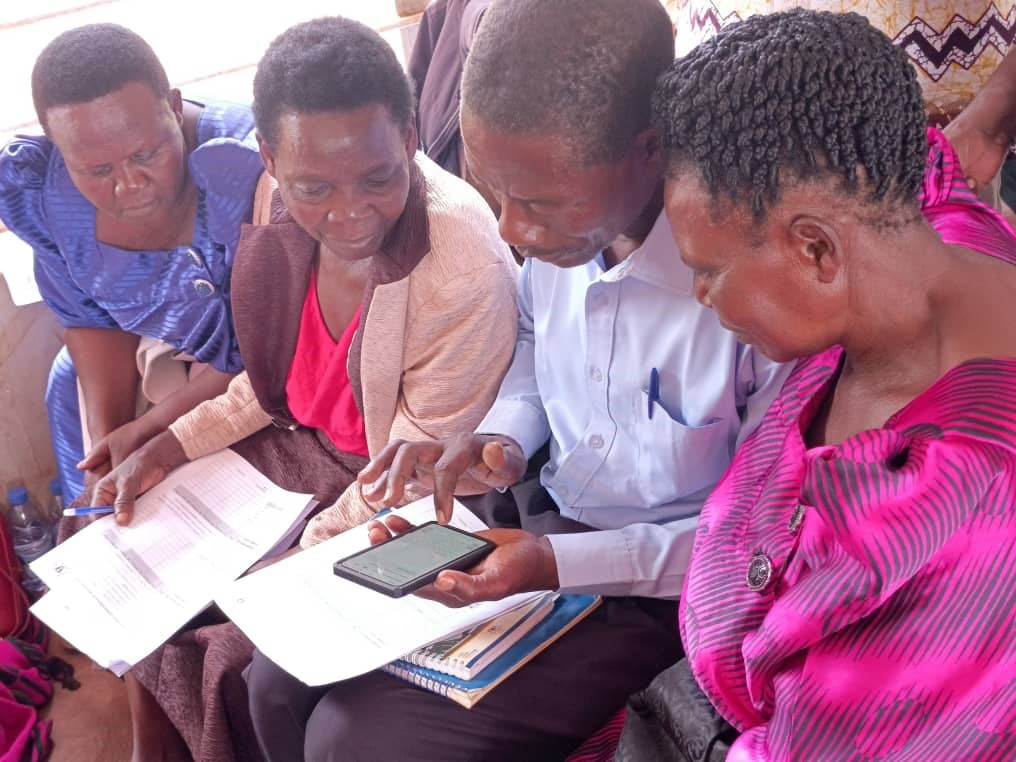
Complementing this, tele-monitoring systems are used to track activities and outcomes in real time. Community change agents submit simple, mobile-enabled reports on sessions held, people reached, and themes discussed. Mentors and project staff use this data to identify gaps, adapt strategies, and continuously improve implementation. This feedback loop ensures that as the number of agents grows, program quality and fidelity are sustained.
Anchored in a causal factor–depth continuum framework, the project tailors interventions to address surface, moderate, and deep-rooted drivers of violence. By combining community-led action with technology-enabled supervision and data use, the project aims to reach tens of thousands of community members, embed new protective norms, and offer a scalable, replicable model for reducing violence against children in low-resource settings.
Project Details
Status
Completed
Location
Kabarole, Kyenjojo and Bunyangabu Districts
Duration
July 2025 - October 2025
Budget
7,000.00
Related Projects
Explore more projects in similar focus areas
Community-led digital surveillance and prevention of violence
National
Budget: $18,500
Jul 2025 - Dec 2025
Girls Education and AGBV prevention
Uganda and Mozambique
Budget: $800,000
Mar 2026 - Feb 2027
Gender-Based Violence Prevention
Amuria and Buikwe
Budget: $15,000
Dec 2025 - May 2026